
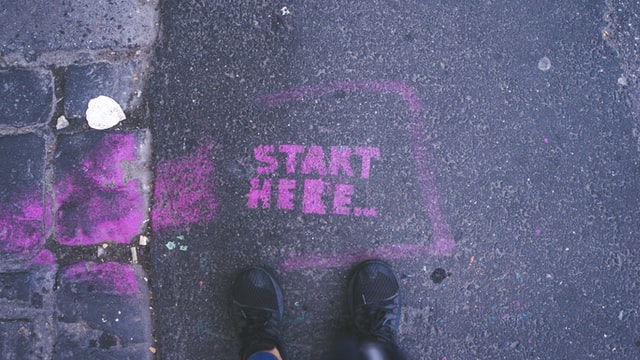
A story’s first pages make promises to the reader. As an author, you must understand what those promises are so that the rest of your book fulfills them.
In general, your opening scene gives us clues about the genre. Family drama? Historical fiction? Coming-of-age YA? Paranormal? The beginning also grounds us in location and time period, introduces and makes us care about the main character, and hints at problems our protagonist must soon face.
If you lead readers down one path in the first few pages, then pull a switcheroo on page 9, they will: 1) feel betrayed, and 2) be pulled out of the story while they figure out where their initial assumptions went wrong. Obviously, we never want to give readers any reason to close the book.
If your story’s beginning focuses on anything other than your protagonist, their current setting, and their potential conflicts, you’re setting up your readers for a whiplash-inducing course correction. If this kind of bait-and-switch isn’t what you intended, it’s time take a look at your beginning.
After doing a fair amount of judging for writing contests, I’ve noticed some common tropes that writers sometimes fall back on to introduce their stories. Maybe they read one like it and it got caught in their brain as being “the way to write a story,” or they tried it once as an exercise, or they just couldn’t think of anything better. This is okay in a first draft to get your writing journey started, but it will be ripe for the scythe when you start revising.
I’ve identified some of the story beginnings that I’ve seen far too many times. If you’ve using one of these openings, you might want to look for a fresh beginning to your story instead—not because it’s bad, but because it’s been overused. And because you know your story better now than when you first wrote those words. Hook us with something we haven’t already read a dozen (or a hundred) times, and we’ll follow you anywhere.
With all of this in mind, here are my top 10 ways not to start your story. Feel free to ignore these tips until you’re in revision mode, or go ahead and embrace them as you start drafting your story. If you have more suggestions for openings to avoid, add them in the Comments below!
- In a dream.
Classic bait-and-switch. Starting your story inside your character’s dream deliberately offers your reader a wrong promise. Often the dream is set in a different world, making us think it’s a fantasy when it’s not, for example. Or we may think the protagonist is in mortal danger, when they’re really just sleeping through gym class. Not only does this lead us down the wrong initial path, it’s jarring and confusing. We want to get to know this protagonist. Dropping us into a nightmare before we’ve learned to care about this character may seem exciting, but it’s mostly disorienting and annoying.
- Looking at a photograph.
Gazing into a photograph is a very passive activity, almost always used as a device (in other words, an excuse) to indulge in a long expository piece of backstory. It feels like a cop-out—a short-cut to convey information without having to work it into a scene more organically. In a story’s beginning, it’s especially noticeable. Later in the story, a photo is acceptable for triggering an emotion, a reaction, or a clue, but it should never be used as a way to sneak in an “info-dump.”
- Looking into a mirror.
Mirror-gazing is another common info-dump culprit. While photo-gazing tells us backstory, mirror-gazing tells us what the protagonist looks like and gives them a stage to let loose with a monologue about their current troubles. We would rather form our own opinions of the character based on their actions and interactions rather than on what they want to tell us. It feels artificial to hear, “My blue eyes stared back at me as I brushed my shoulder-length brown hair away from my freckled face, while I contemplated the situation I was in.”
- In a character’s backstory.
Start with the story, not the backstory. Starting in the backstory risks making the wrong promise to your reader. (“Oh, this isn’t the story of a 10-year-old skateboarder, it’s about a 30-year-old marketing executive instead?”) It essentially makes the reader start a story twice, which delays the point where they become fully engaged with your character. Not good.
- On an ordinary day, when nothing unusual is happening, and things aren’t about to change.
Closely related to #4. While not a hard-and-fast rule, a good guideline for modern storytelling is to begin at the pivotal moment when the protagonist’s life is about to change, whether they know it or not. Don’t bog us down with the mundane. Who is this person, and why is their life about to change?
- With long descriptions of the setting.
In bygone days, books were more than a pastime—they were often the only way average people could experience far-flung locations. Modern readers don’t have the patience for long openings that describe a location in detail but don’t introduce the character (a l James Michener). They want rich settings, but those shouldn’t get in the way of meeting a compelling character first.
- With the focus on a character who turns out not to be the main character.
Readers assume the first character they meet is the one they should care about. After becoming invested in that character, they’ll feel frustrated if they must start over with a new one, even if your bait-and-switch was unintentional.
- Right after something interesting has happened.
I once read a manuscript that started with the main character sitting in a car, thinking about how he had stolen a body from a morgue. Hello? Watching a guy remembering something is boring. Watching a guy steal a body from a morgue—now there’s an opening scene I’d pay to read! We can catch up with his internal dialogue later, when we know more about him.
- With a cliché.
You already know this rule like the back of your hand, right? Ha.
- Once upon a time…
Even if you’re spinning a modern fairy tale, don’t use “Once upon a time” or any variation. Yes, Star Wars did it with “A long time ago, in a galaxy far, far away,” and it was fun, unexpected, and fresh in that genre. But it’s unnecessary and soooo overused.
Whatever beginning you choose, understand the promises your first few pages are making, commit to fulfilling them in the rest of your story, then make that opening scene shine.
[Photo by Gia Oris on Unsplash]
 Kelley J. P. Lindberg writes YA and adult fiction, magazine articles, essays, and how-to books. Her fiction and essays have appeared in literary magazines such as The Baltimore Review, Wilderness House Review, and The Citron Review; in anthologies including Bizarre Bazaar, This Isn’t the Place, and Journeys into Possibility; and in the Tellables app for Amazon Alexa. When she isn’t writing, she’s traveling as far and as often as she can. Visit her at www.KelleyLindberg.com or follow her on BlueSky, X, and Instagram at @KelleyLindberg1.